
The Creepers (2025)
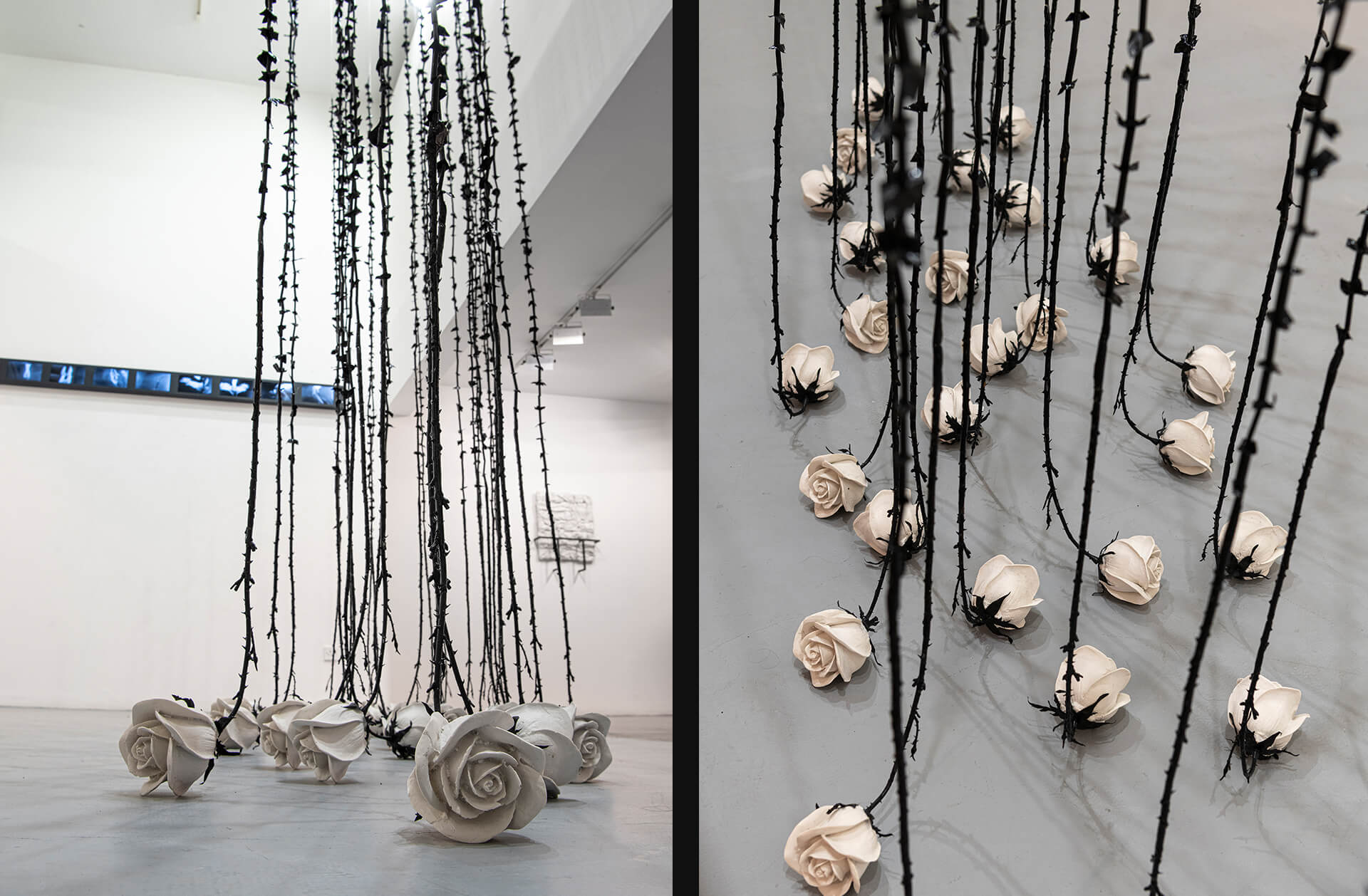
30 alabaster casts roses, metal, wood, resin, paint, dimensions variable
The Creepers
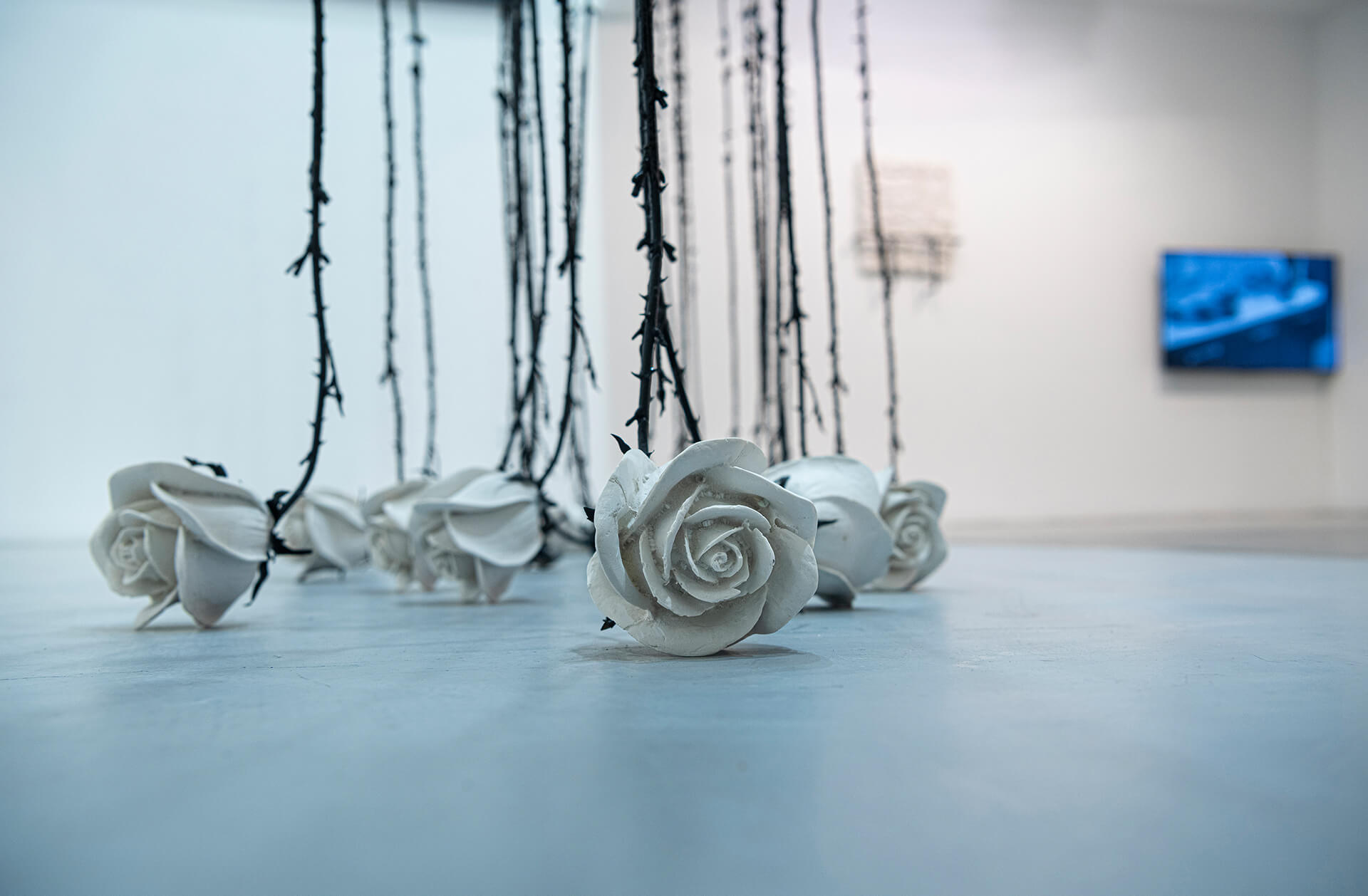
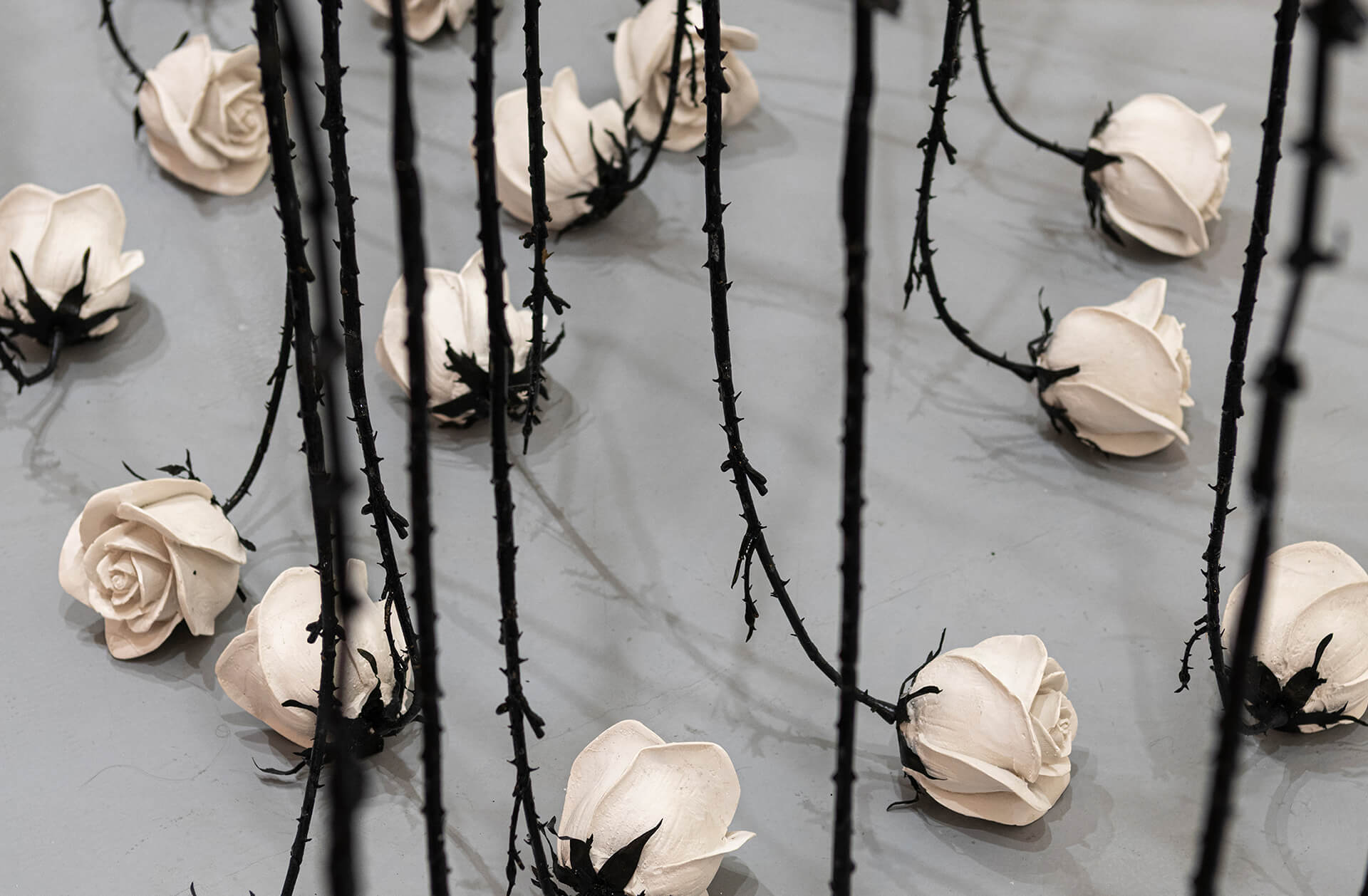
The Creepers unfolds as a sculptural installation in which clusters of inverted alabaster roses descend toward the floor, suspended between delicacy and collapse. Through this subtle reversal of the flower’s natural orientation, Klitsa Antoniou destabilizes familiar associations of beauty, growth, and transcendence. The roses no longer rise upward toward light; instead, they gravitate downward, insisting on weight, fragility, and persistence. The installation proposes a quiet reflection on endurance, where vulnerability becomes a sustained condition rather than a moment of defeat.
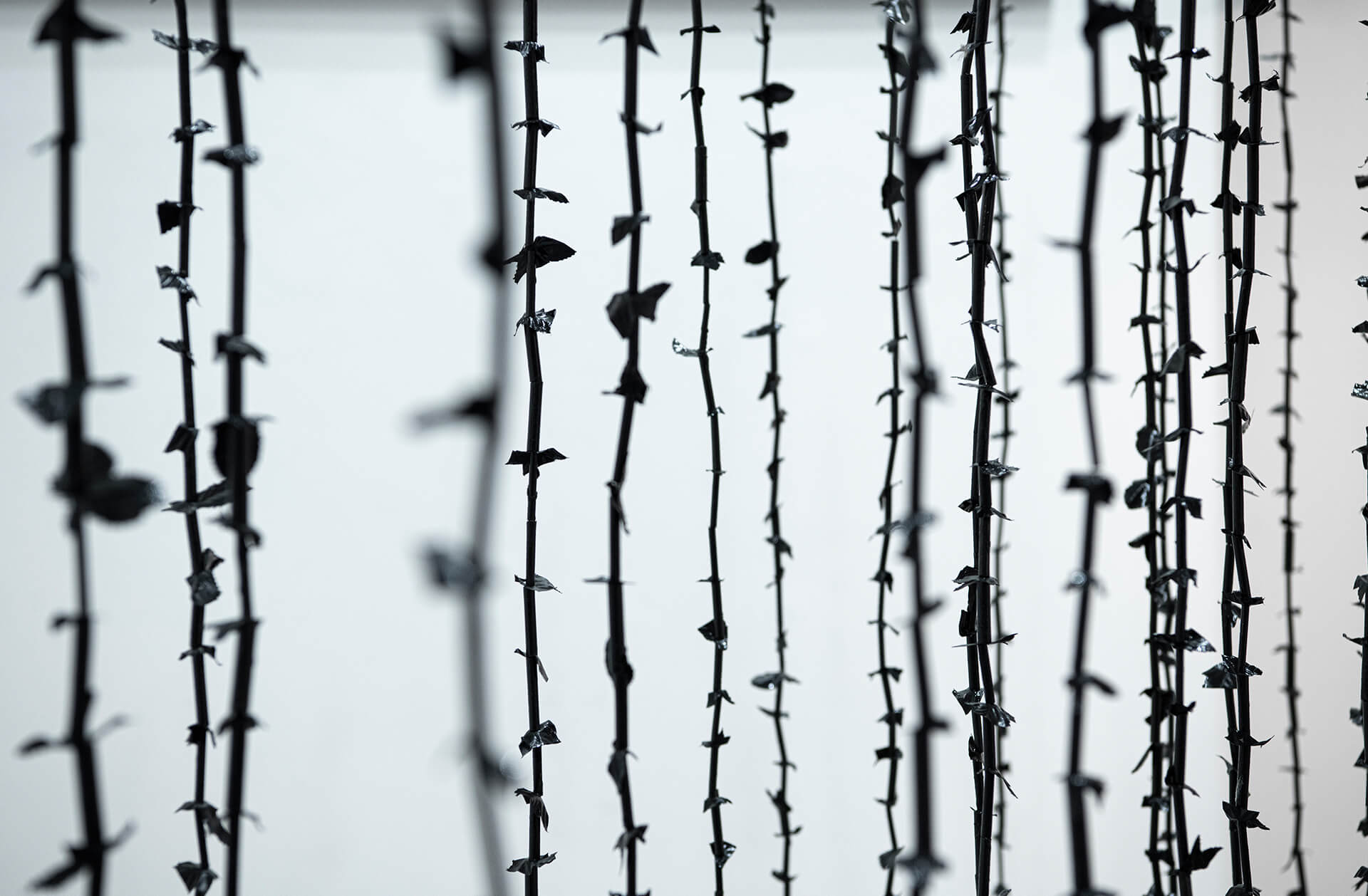
The work balances opposing states: softness and rigidity, organic life and fossilization, permanence and decay. Cast in alabaster yet resembling living botanical forms, the roses appear suspended in a temporal ambiguity, as if caught between blooming and withering. Antoniou transforms the flower from a decorative symbol into a material presence charged with psychological and existential tension. The repeated vertical elements evoke creeping vegetation, roots, or hanging remnants, creating an environment that feels both protective and unsettling.
Rather than presenting nature as an idyllic escape, The Creepers reveals it as a field of contradiction and emotional complexity. The installation quietly addresses the ways in which forms of survival are shaped through gravity, pressure, and time. Its restrained visual language resists spectacle, favoring slowness and attentiveness. In this suspended environment, fragility is not opposed to strength but becomes another expression of it.
The work also gestures toward the unstable relationship between the human body and the natural world. The roses resemble traces or remains, carrying an almost memorial quality, while their downward movement suggests both mourning and continuity. Through this tension, Antoniou creates a contemplative space where beauty coexists with unease, and where nature becomes a metaphor for persistence within uncertain conditions. The installation ultimately invites viewers to reconsider resilience not as heroic resistance, but as a quiet and ongoing negotiation with transformation, loss, and survival.